T+2 → T+1 Settlement Cycle
Faster, Safer, and More Efficient Capital Markets, Coming 29 May 2026
About the Transition
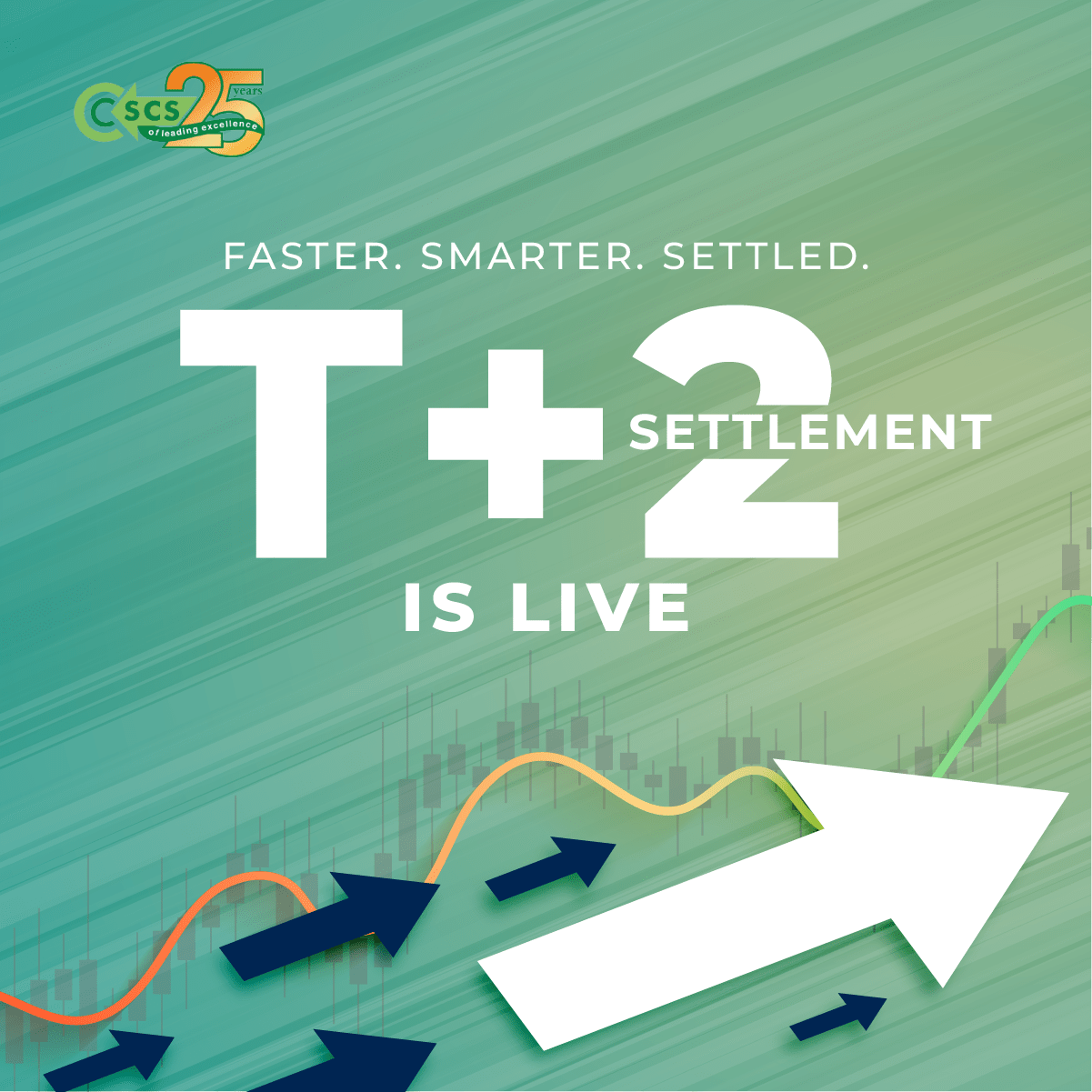
The Securities & Exchanges Commission (SEC) has reviewed and approved for Nigeriau2019s capital market to transition from the current T+3 (Trade Date plus three days) settlement cycle to a T+2 (Trade Date plus two days) settlement cycle, effective November 28th, 2025. This means that securities and funds from trades will be settled within two business days after a transaction is executed, rather than the current three business days.
By reducing the time between trade execution and settlement, Nigeriau2019s market becomes more competitive, liquid, and resilient.
This upgrade reflects the commitment of regulators, exchanges, and financial institutions to modernize Nigeriau2019s capital markets, improving investor confidence and reducing risks associated with delayed settlements.
What is T+2?
T+2 is the settlement cycle where the completion of a securities trade, including the transfer of ownership and payment, occurs two business days after the trade is executed. For example, a trade executed on Monday (Trade Day) will be settled by Wednesday (Trade Day + 2 Business Days).
Hereu2019s how it works:
Trade Day (T): A trade is carried out (e.g., an investor buys shares on Monday).
Settlement Day (T+2): The transaction is completed – cash is exchanged, and securities are delivered by the second business day after the trade (in this case, Wednesday).
Rationale for reducing the settlement cycle
Nigeria is adopting the T+2 settlement cycle to:
- Align with global standards: Major financial markets already use a T+2 or faster cycle for settlement of capital market transactions.
- Improve market liquidity: Faster settlement reduces counterparty risk and frees up capital quicker for reinvestment.
- Enhance investor confidence: A shorter cycle minimizes price fluctuations and uncertainties between trade and settlement, thus boosting investor confidence.
- Boost competitiveness: Attracts more foreign and domestic investors by meeting international standards and increasing operational efficiency.
Key Benefits for Investors
The transition to T+2 settlement brings significant advantages to all players in Nigeriau2019s capital marketsu2014enhancing efficiency, reducing risks, and improving overall market confidence. Below are the key benefits for different market participants:
- Get funds/securities 1 day faster
- Less risk of price changes before settlement
- Easier reinvestment with quicker access to cash
Implementation Timeline
Governance Setup
Gap Analysis
Regulatory Alignment
Operational Changes
Validation & Transition
Market Engagement
Implementation
T+1 is the settlement cycle where the completion of a securities trade, including the transfer of ownership and payment, occurs one business day after the trade is executed. For example, a trade executed on Monday (Trade Day) will be settled by Tuesday (Trade Day + 1 Business Day).
Here's how it works:
Trade Day (T): A trade is carried out (e.g., an investor buys shares on Monday).
Settlement Day (T+1): The transaction is completed and the seller receives cash, and the buyer receives securities on the next business day after the trade (in this case, Tuesday)

The reduction impacts all tradable instruments except for fixed income instruments and commodities which already settle on a T+2 cycle. You can find a detailed list of impacted assets/stocks on the website for the respective exchanges.
The settlement cycle will normally impact secondary market transactions and is to be implemented on the following exchanges: The Nigerian Stock Exchange (NGX), the NASD OTC Securities Exchange and, the Lagos Commodities & Futures Exchanges (LCFE)
News
Webinars
Central depository for share certificates
Sub-registry for all quoted securities
Issuer of International Securities Identification Numbers
Custodian for local and foreign instruments
Issuer of Legal Entity Identifier (LEI) code for Nigeria
For Support
Contact us
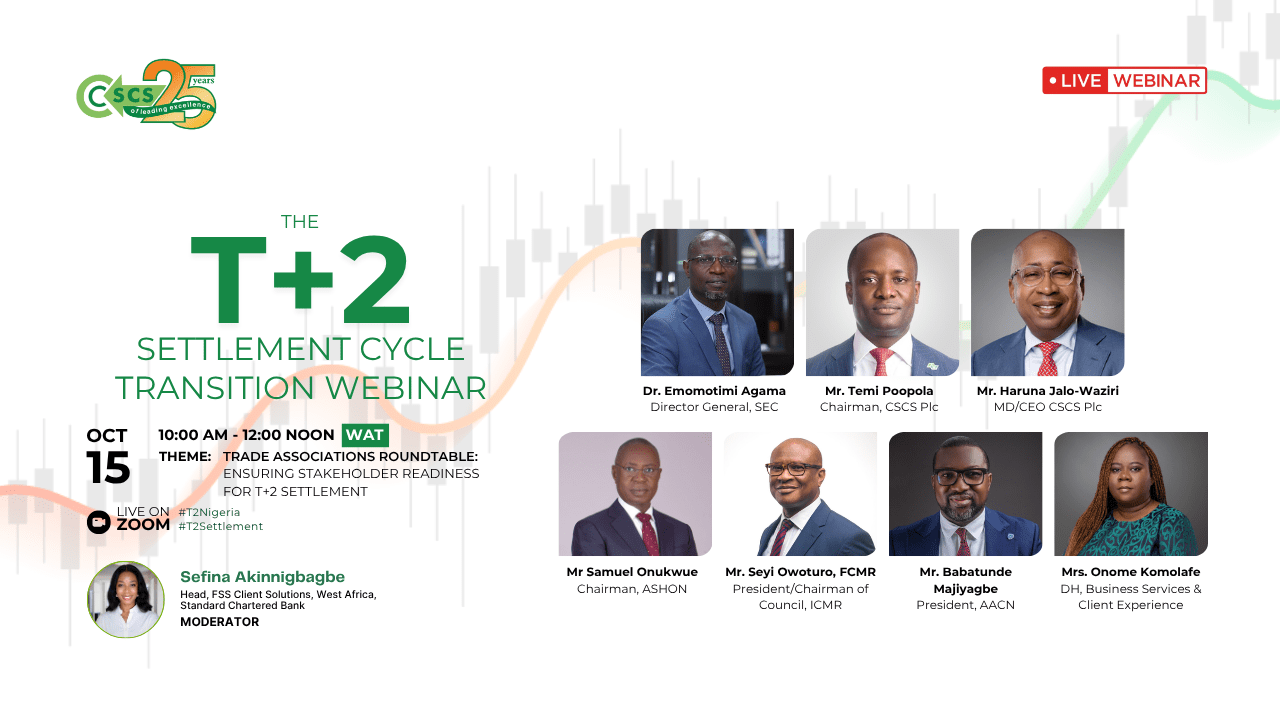
See Upcoming Events